
Madison & Seventy-Second
He noticed the purse first.
Cassiel saw the purse before he saw the woman.
It sat on the pavement beside a black Mercedes at the corner of Madison and Seventy-Second, an elegant thing in ivory leather with a gold clasp, placed between the rear tire and a tower of glossy shopping bags. Careless. Exposed. Practically begging to be stolen.
Cassiel noticed such things.
He noticed the driver standing outside the vehicle instead of behind the wheel. He noticed the broad-shouldered guard near the rear door watching the storefront rather than the street. He noticed a second guard ten feet away with a phone pressed to his ear, his back turned to the crosswalk.
Three men assigned to protect one woman, and none of them was watching her purse.
Cassiel took the paper cup the barista handed him and moved toward the coffee shop window.
“Your change,” she called.
“Keep it.”
From the window, he studied the security detail more closely.
The Mercedes was positioned badly, boxed in by a delivery van at the front and a town car at the rear. The driver had left the engine running, but he had stepped far enough away that someone could reach the door before he did. Pedestrians flowed between the guards and their principal without being redirected. No one had established a perimeter. No one appeared concerned about the black motorcycle idling half a block away with two helmeted men seated on it.
Amateurs, Cassiel thought.
Expensive amateurs, but amateurs nevertheless.
Then the woman stepped out of the boutique, and every other thought left him.
She emerged beneath the striped awning carrying a narrow blue box against her chest. The afternoon wind caught her hair, lifting dark strands away from a face that was at once refined and unexpectedly alive. She wore a pale coat open over a cream dress, and the sunlight struck a pair of small diamonds at her ears.
She wasn’t smiling for the benefit of the people around her. She was smiling because an elderly woman was struggling with the boutique door, and Adrienne—though Cassiel did not yet know her name—turned back to hold it.
Her security detail tightened around her too late.
The guard on the phone ended his call. The driver took two steps toward the curb. The largest of the three reached for the shopping bags but left the ivory purse where it was.
Cassiel had seen more beautiful women than he could remember. He had met women whose faces appeared on billboards, whose names opened doors, whose diamonds could have paid the mortgage on the building in which he stood.
None had ever stopped him cold.
This was not simple attraction. It did not begin in his body, though his body responded to her. It was more disorienting than desire—a strange recognition, as if he had opened a door in an unfamiliar house and discovered a room he remembered from childhood.
The sensation irritated him.
Cassiel did not believe in fate. Fate was the excuse people used when they failed to see the trap being built around them.
He believed in observation. Preparation. Exit routes.
And something was wrong.
The motorcycle had not moved. Its passenger was looking directly at the woman.
A gray sedan waited across the intersection with its hazard lights flashing, although there was no visible mechanical problem. The driver’s window was down despite the cold. Two men stood beside a newspaper kiosk without reading anything. A third leaned against the delivery van in front of the Mercedes, one hand hidden beneath his jacket.
Cassiel raised his coffee but did not drink.
The security detail had seen none of them.
The woman descended the shallow boutique steps. One guard opened the Mercedes door. Another bent to gather the shopping bags.
The gray sedan’s hazard lights stopped flashing.
It began to roll.
Cassiel set his untouched coffee on a café table and walked outside.
A horn sounded. A cyclist shouted at a cabdriver. Somewhere down the avenue, brakes squealed. The ordinary music of Manhattan continued, indifferent to the violence forming inside it.
Cassiel crossed the pavement quickly.
He was ten feet from the woman when the man beside the newspaper kiosk touched two fingers to his collar.
A signal.
Cassiel increased his pace.
The large guard stepped into his path. “Sir, move along.”
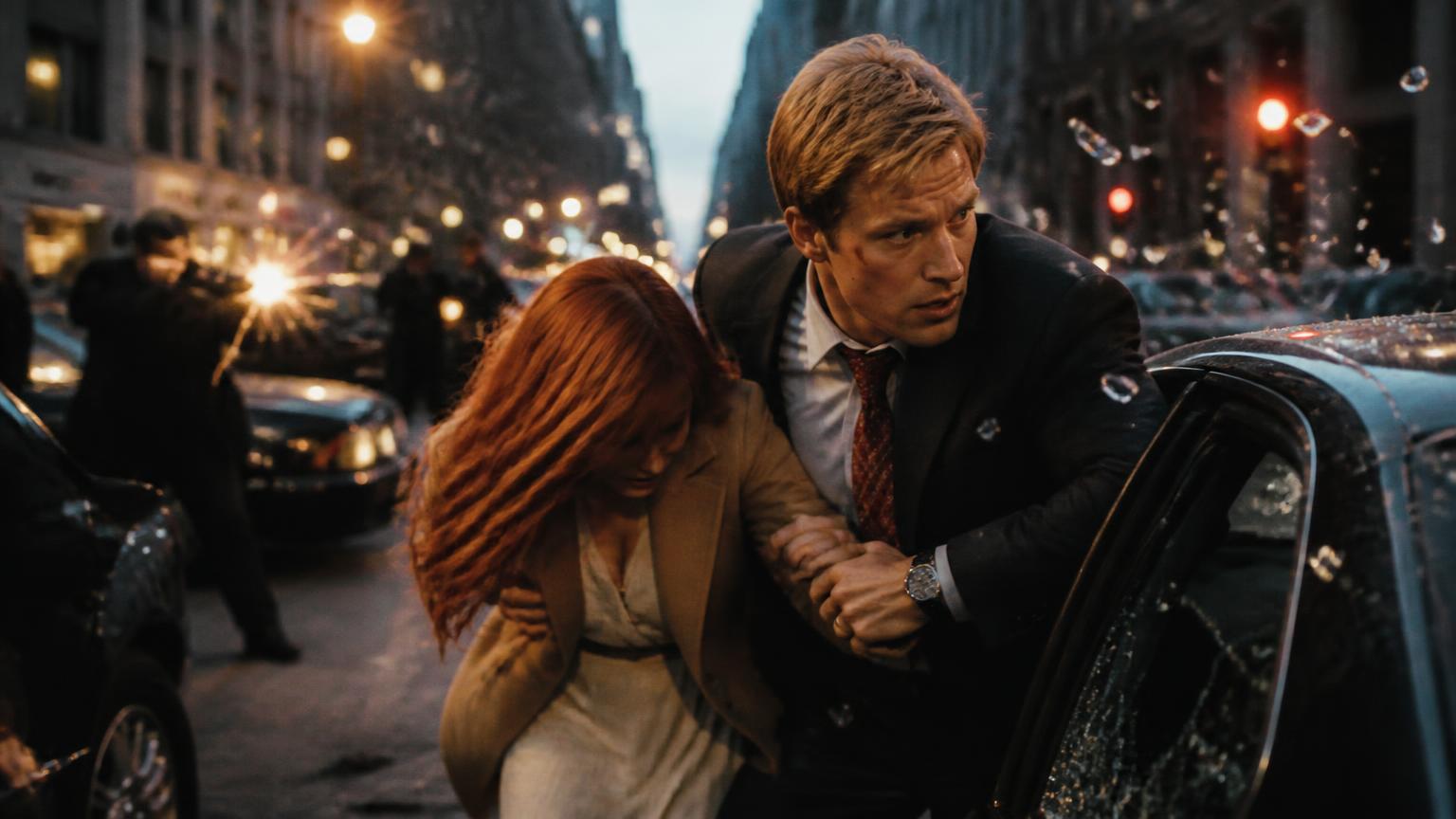
The Signal
Two fingers to a collar. Then glass.
Cassiel looked past him. “Get her into the car.”
The guard frowned. “I said move along.”
The woman turned at the sound of Cassiel’s voice.
Up close, she was even more arresting. Her eyes were gray-green, clear and intelligent, and presently filled with offended confusion.
“Excuse me?” she said.
Cassiel pointed toward the open Mercedes. “Get into the car.”
Her eyebrows lifted. “Who are you?”
“No time.”
The guard seized Cassiel’s arm.
It was a mistake.
Cassiel looked down at the hand gripping his coat sleeve and then back at the guard. “Take your hand off me.”
“You need to step away from Ms.—”
“Do it,” Cassiel said to the woman.
Her expression hardened. “You cannot walk up to me on the street and order me into a car.”
“I just did.”
“I’m not going anywhere with you.”
“It’s your car.”
“That isn’t the point.”
The man beside the delivery van started toward them.
Cassiel saw the bulge beneath his jacket, the deliberate angle of his approach and the slight turn of his body designed to conceal his right hand.
The guard holding Cassiel saw only an insolent stranger bothering his principal.
Cassiel twisted free. “Your security has been compromised.”
The woman glanced at her guards. “What?”
“Get inside.”
The largest guard moved between them. “That’s enough.”
“No,” Cassiel said quietly. “It isn’t.”
A white van shot around the corner against the light.
It jumped the curb.
Pedestrians scattered as the van struck a newspaper box and sent it spinning across the pavement. The box crashed into the Mercedes’s front fender. The driver turned toward the sound.
The man at the delivery van drew a weapon.
Cassiel hit the woman low around the waist and drove her behind the open car door as the first shot cracked through the street.
Glass exploded from the boutique window.
Screams rose around them.
The guard who had challenged Cassiel reached beneath his jacket, but one of the men from the kiosk struck him from behind. He fell against the roof of the Mercedes. Another attacker grabbed the guard’s gun before it cleared its holster.
Everything happened at once.
The white van’s side door slid open. Two masked men jumped out. One hurled a smoke canister beneath the Mercedes. The other seized the driver by the collar and slammed his head against the doorframe.
The woman struggled against Cassiel.
“Let me go!”
“They’re here for you.”
“My security—”
“Is losing.”
The smoke canister hissed, spilling a dense white cloud around their legs.
A masked man emerged through it and reached for her.
Cassiel struck the inside of the man’s elbow, breaking the grip before it formed. He drove the heel of his hand into the attacker’s nose, caught the descending wrist and turned until bone gave way with a muffled crack.
The attacker screamed.
Cassiel took the weapon from his hand and drove his shoulder into the man’s chest, sending him backward into the open van door.
The woman stared at Cassiel.
“Now,” he said. “Get in the car.”
She moved at last, but before she reached the seat, someone caught the back of her coat.
Her body jerked away from Cassiel.
A second masked man wrapped an arm around her waist and dragged her toward the white van. She kicked hard enough to lose one shoe, twisting and clawing at his sleeve. The blue box fell from her hands and burst open on the pavement. A silk scarf unfurled beneath the feet of fleeing pedestrians.
Cassiel crossed the distance in two strides.
He caught the attacker at the base of the skull and drove his face into the edge of the Mercedes door. The man’s hold loosened. Cassiel pulled the woman free, turned and took a blow across the ribs from another attacker.
Pain flared through his side.
He ignored it.
The attacker swung again. Cassiel blocked the punch, trapped the man’s wrist and used his forward momentum to send him over the hood. Metal groaned beneath the impact.
The woman backed against the car, breathing hard.
Cassiel seized her hand.
“This way.”
“You told me to get in!”
“Change of plan.”
The Mercedes was no longer an escape route. The delivery van blocked it at the front, the town car at the rear, and smoke swallowed the street around it. Worse, the driver’s door stood open and the driver lay motionless beside it.
Cassiel pulled the woman toward the opposite curb.
The ivory purse remained beside the rear tire.
He scooped it up without breaking stride.
She looked at him in disbelief. “You stopped for my purse?”
“It was on the ground.”
“That hardly seems important right now.”
“It was irritating me.”
Another shot struck the Mercedes behind them.
Cassiel pushed her down and covered her with his body as the rear window shattered. He felt the whisper of glass against the back of his coat.
Her face was inches from his. Shock had widened her eyes, but beneath it he saw anger, calculation and a refusal to surrender to panic.
Not fragile, then.
Good.
“Can you run?” he asked.
“I’m missing a shoe.”
“That wasn’t my question.”
“Yes.”
Cassiel straightened, keeping her behind him. His car waited halfway down the block—a dark silver Jaguar that looked old enough to be sentimental and moved fast enough to be dangerous.
They ran.
The remaining members of her security detail were exchanging fire with the attackers. One guard had reached the woman’s driver and was pulling him behind the Mercedes. Sirens sounded in the distance, but Cassiel knew how long a distance could become when measured in bullets.
He heard the white van’s engine roar.
The woman looked back.
“Don’t,” Cassiel said.
“They’re following us.”
“I know.”
“How do you know?”
“I can hear them.”
The van mounted the pavement behind them.
Cassiel pulled her sharply into the narrow space between a parked SUV and a construction barrier. The van clipped the SUV, tearing away its mirror, but continued forward.
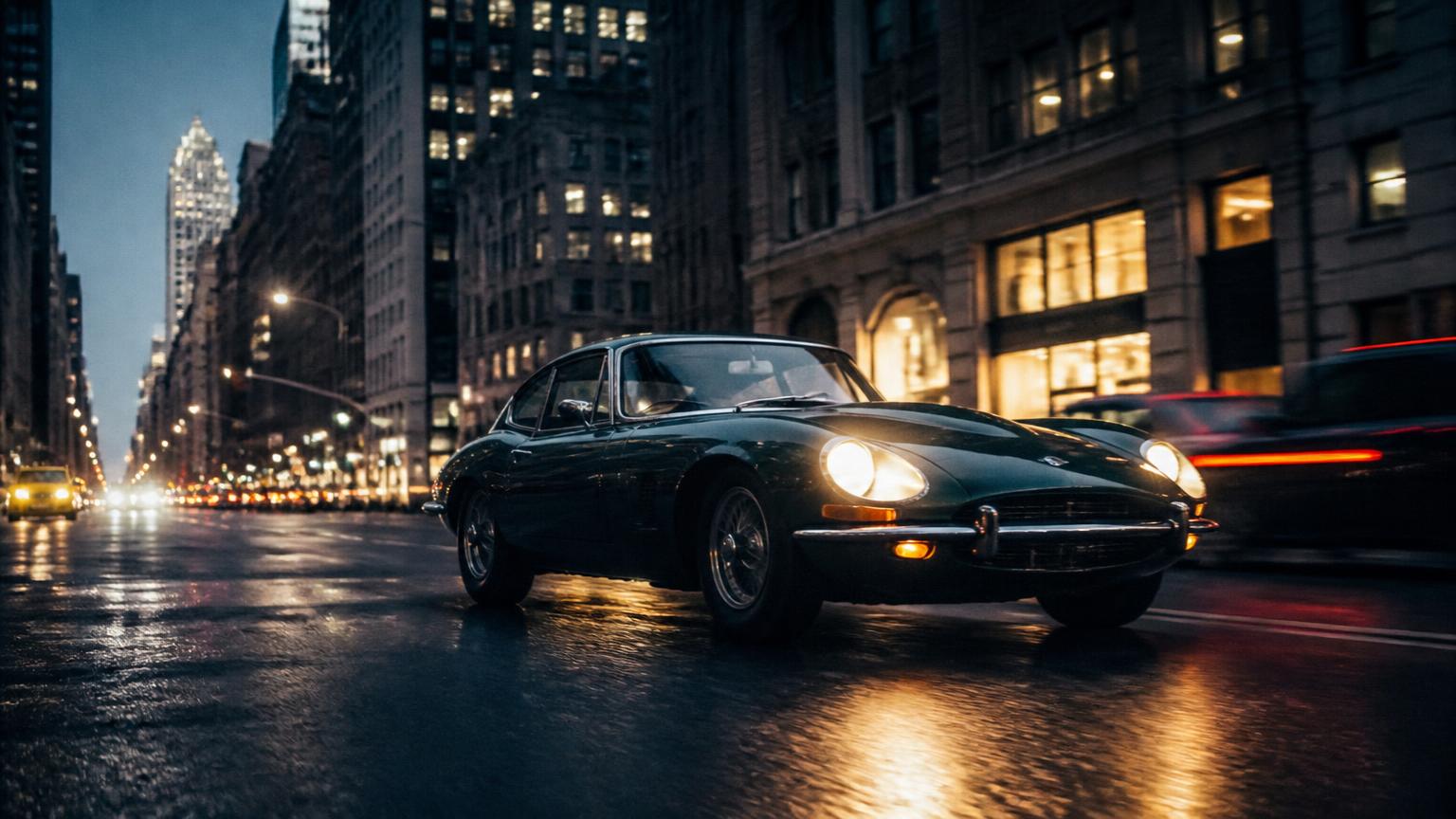
The Jaguar
Twenty yards. Ten. Five.
His Jaguar was twenty yards away.
Ten.
Five.
Cassiel pressed the key in his palm. The lights flashed. He opened the passenger door and pushed the woman inside.
“Stay down.”
She caught the door before he could close it. “My guards are back there.”
“They have guns and reinforcements coming.”
“They’re hurt.”
“And you’re the reason the men in that van are here. If we leave, they follow us instead of finishing the job behind us.”
She understood. He saw the moment logic overcame outrage.
She lowered herself beneath the dashboard.
Cassiel closed the door, rounded the hood and slid behind the wheel.
The Jaguar started with a deep, restrained growl.
The white van appeared in his mirror.
He pulled into traffic.
A cabdriver leaned on his horn as Cassiel cut across two lanes. The Jaguar’s rear end swung toward a city bus and cleared it by inches. He accelerated through the changing light.
The woman gripped the dashboard. “Are you insane?”
“Probably.”
“Who are you?”
“Put on your seat belt.”
“Who are you?”
“Cassiel.”
“Cassiel what?”
“Seat belt.”
She glared at him but pulled the belt across her body.
“My name is Adrienne,” she said.
“I know.”
“You do?”
“One of your guards almost said it.”
“That isn’t the same as knowing.”
“It’s enough for the moment.”
The white van forced its way through the intersection behind them. Cars scattered around it.
Cassiel checked the mirrors. “Do you know those men?”
“Of course I don’t.”
“Did anyone threaten you?”
“No.”
“Any disputes? Business problems? Family enemies?”
“My family has employees who handle threats.”
“They’re doing an excellent job.”
She turned toward him. “You don’t have to be cruel.”
“No. I have to keep you alive.”
A bullet struck the trunk.
Adrienne flinched.
Cassiel’s gaze shifted to the side mirror.
The motorcycle was coming fast between the lanes. The passenger had one hand braced on the driver’s shoulder and a gun in the other.
“Down,” Cassiel said.
Adrienne did not move quickly enough.
Cassiel caught the back of her neck and pulled her across the console as the motorcycle drew even with the car. Three shots shattered the side windows. Safety glass sprayed across the seats.
Adrienne cried out as the Jaguar swerved.
Cassiel fired once through the broken passenger window—not at the men, but at the motorcycle’s front wheel.
The shot went wide.
The motorcycle dropped behind them, then accelerated again.
Adrienne pushed herself upright. Blood ran from a cut near her hairline.
Cassiel’s hand tightened on the wheel. “You’re hurt.”
“I hit the door.”
“Can you see clearly?”
“Yes.”
“Nauseous?”
“No.”
“Stay awake.”
“I wasn’t planning to take a nap.”
The dry answer relieved him more than it should have.
Cassiel drove east, using the congestion as both obstacle and cover. The van could push smaller vehicles aside, but it could not maneuver as quickly as the Jaguar. The motorcycle remained the greater threat.
He ran another light and turned south.
Adrienne pressed a hand against her temple. “Where are we going?”
“Somewhere safe.”
“Police.”
“No.”
She stared at him. “No?”
“They had your route, your vehicle and the exact moment you left that store. Someone knew your schedule.”
“That doesn’t mean the police are involved.”
“It means I don’t know who is involved.”
“And I’m supposed to trust you?”
“You got into my car.”
“You threw me into your car.”
“A technical distinction.”
“It is not technical.”
The motorcycle returned on the driver’s side.
Cassiel saw the weapon rise.
He slammed on the brakes.
The motorcycle shot ahead. The gunman twisted in his seat, trying to recover his aim. Cassiel turned hard into a narrow service street, struck a stack of empty plastic crates and sent them scattering behind the Jaguar.
The motorcycle followed.
The van could not make the turn.
One problem temporarily removed.
The service street ran between two construction sites and ended at a locked chain-link gate.
Adrienne saw it. “Cassiel.”
“I see it.”
“It’s a dead end.”
“I know.”
“You don’t sound concerned.”
“I’m busy.”
He accelerated.
“Cassiel!”
At the last possible moment, he pulled a small black device from the console and pressed the button.
The chain-link gate began to roll aside.
Adrienne stared at it, then at him. “Why do you have a remote for a construction gate?”
“I’m friendly with the owner.”
“You’re lying.”
“Yes.”
The opening was barely wide enough.
The Jaguar slipped through, scraping one mirror against the metal. Cassiel pressed the button again. The gate reversed.
The motorcycle rider tried to follow.
The gate struck the motorcycle’s handlebars. Metal shrieked. The front wheel twisted sideways and the machine went down in a violent spray of sparks.
Cassiel looked in the rearview mirror. Both riders were moving, but neither rose.
He continued through the construction site and down a concrete ramp into an unfinished underground garage.
Adrienne looked back. “You could have killed them.”
“They were shooting at us.”
“That isn’t an answer.”
“It’s the only one I have.”
The garage opened into a completed section beneath the neighboring building. Cassiel drove through rows of parked vehicles, turned twice and stopped beside a white utility truck.
He killed the Jaguar’s lights.
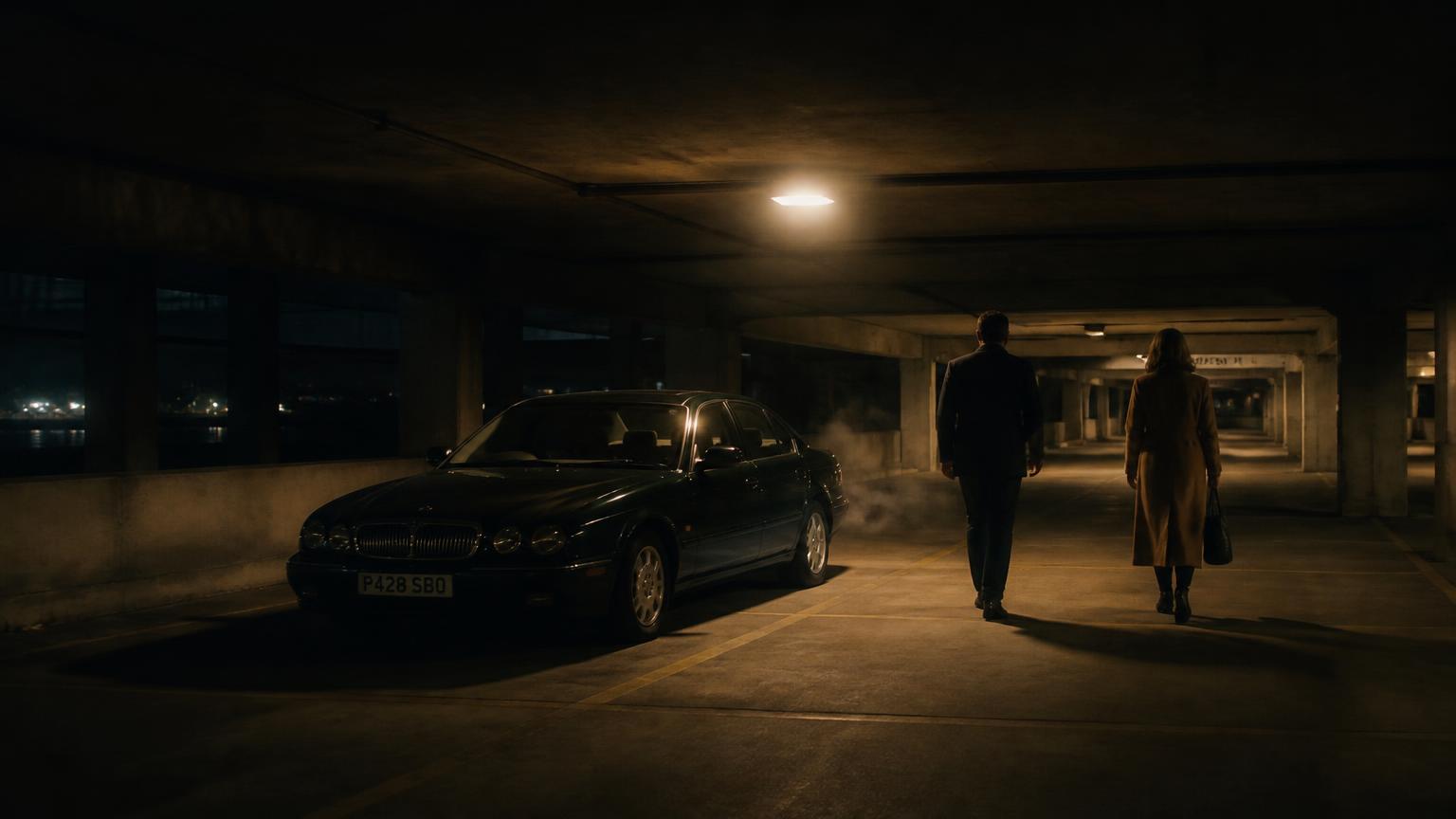
Below the City
Headlights off. Nothing followed.
Adrienne was silent.
Above them, the city continued to move. Down here there was only the ticking engine, the smell of dust and the uneven sound of her breathing.
Cassiel checked the mirrors again.
Nothing followed.
He turned toward her.
Blood had reached her cheek.
“Let me see.”
She recoiled when he lifted his hand.
Cassiel stopped.
Something in her expression shifted. Not fear of him exactly, but the aftermath of being grabbed by too many strangers.
He lowered his hand. “You struck your head.”
“I’m aware.”
“You need a doctor.”
“I thought the police and hospitals were unsafe.”
“Public hospitals. I know someone.”
“Of course you do.”
Cassiel removed a clean handkerchief from his coat and held it out.
She took it, pressed it to the cut and winced.
“Thank you,” she said reluctantly.
“For the handkerchief or the kidnapping?”
Her eyes narrowed. “You did not kidnap me.”
“That’s encouraging.”
“You are, however, holding me in an underground garage and refusing to call the police.”
“You’re free to leave.”
She looked around at the concrete pillars and empty parking spaces.
“Where are we?”
“Six blocks from the men who tried to put you in a van.”
“That is not a location.”
“It’s the important part.”
She studied him for a long moment.
Cassiel was accustomed to being evaluated. Most people saw what he allowed them to see: expensive coat, calm voice, indifference sharpened into arrogance. Adrienne looked longer than most. Her gaze moved from the cut along his knuckles to the blood darkening his shirt near the ribs where the attacker had struck him.
“You’re injured,” she said.
“It’s nothing.”
“That’s what men say when they don’t want anyone looking closely.”
“And what do women say?”
“That they’re fine.”
“Are you?”
“No.”
The honesty caught him unprepared.
She lowered the handkerchief. Blood marked the white linen like the opening of a rose.
Cassiel wanted to touch her. He wanted to move the dark hair from her face, inspect the wound and assure himself that the life he had noticed through a coffee shop window had not been diminished.
He had known her for less than fifteen minutes.
The realization should have made the impulse absurd.
It did not.
“We have to move,” he said.
“What about your car?”
“They’ll have the description.”
“Do you have another?”
Cassiel glanced toward the utility truck.
Adrienne followed his gaze. “That belongs to you?”
“Not exactly.”
Her lips parted. “Are you going to steal it?”
“Borrow.”
“That is stealing.”
“Only if I fail to return it.”
“You cannot possibly believe that.”
Cassiel got out of the Jaguar.
Inside the utility truck, he found the keys clipped beneath the driver’s seat exactly where the construction supervisor always left them. Cassiel had discovered the habit months earlier while researching an apartment three floors above the garage.
He returned to Adrienne’s side and opened the door.
She remained seated.
“I’m not getting into a stolen truck.”
“Then stay in the car men with guns are looking for.”
She gave him a look that promised she would dislike him for a considerable time.
Cassiel found himself hoping she would have the opportunity.
He held out his hand.
After a moment, she placed hers in it.
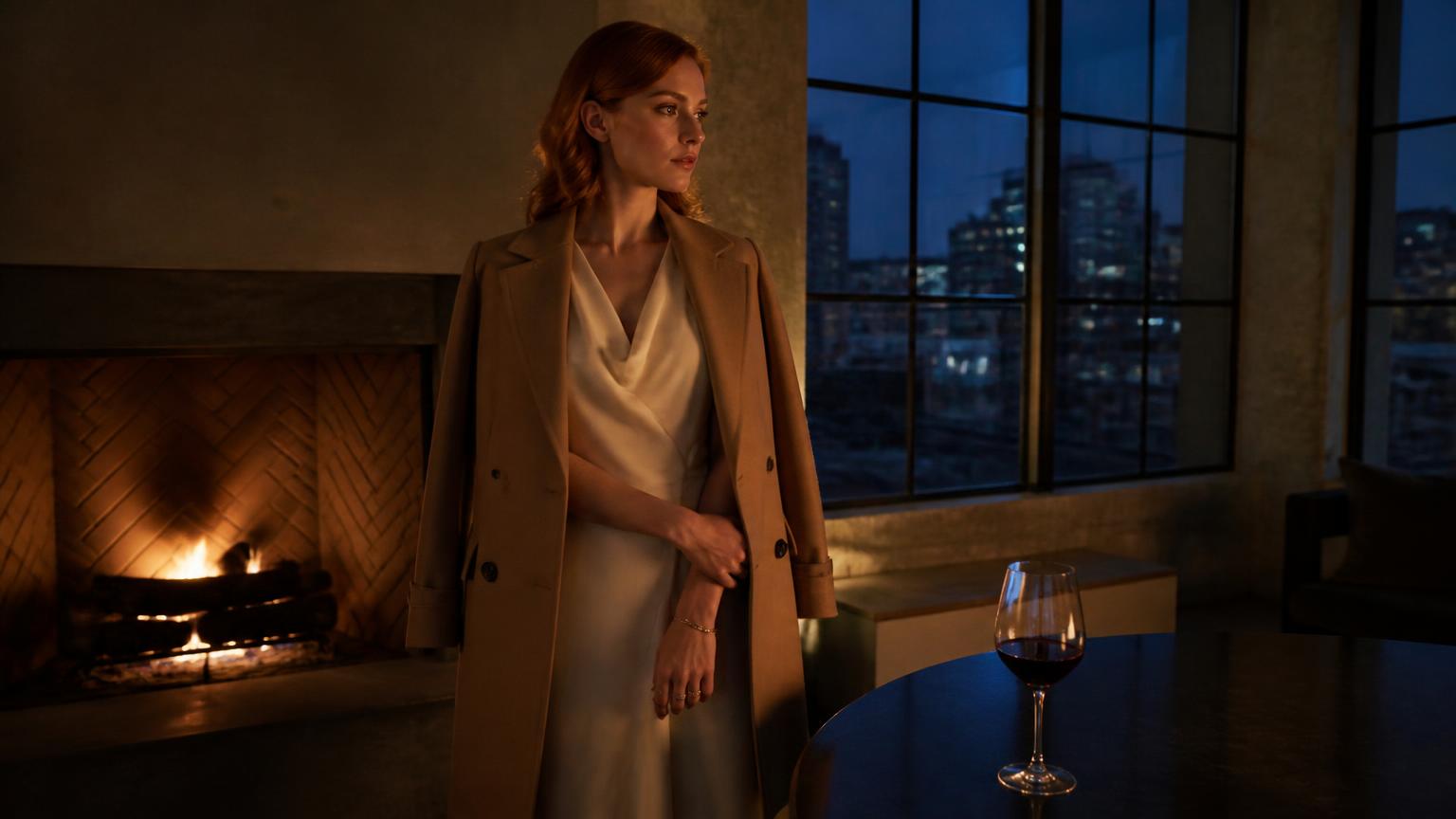
The Loft
A stranger's shirt. A stranger's fire.
Her fingers were cold.
He helped her from the Jaguar. She swayed slightly when her feet touched the concrete, and Cassiel caught her around the waist.
For one suspended second, she rested against him.
He felt the shape of her beneath the pale coat, the quick rise and fall of her breathing and the pressure of her hand against his chest. Her face tilted toward his. The anger in her eyes had given way to confusion.
Cassiel’s entire body went still.
Then she stepped away.
“My shoe,” she said.
He looked down.
One bare foot rested on the concrete.
Cassiel took off his coat and placed it around her shoulders. Then he lifted her without warning.
Adrienne gasped and caught his neck. “Put me down.”
“You have no shoe.”
“I can walk.”
“On broken glass?”
“I can—”
“Stop arguing for thirty seconds.”
“You ordered me into a car, dragged me through a gunfight and stole a truck. I’m entitled to argue.”
“You have twenty-eight seconds left.”
She looked as if she might slap him.
Instead, she tightened her arms around his neck as he carried her toward the truck.
Cassiel tried not to notice how naturally she fit against him.
He failed.
The loft occupied the top floor of a former textile warehouse on the southern edge of Tribeca. From the street, the building looked neglected—faded brick, narrow windows and an old brass plaque beside an unmarked steel door. Inside, it contained a private freight elevator, reinforced locks and a security system designed by a man who had once broken into the Belgian National Bank for sport.
Cassiel drove the utility truck into the building’s loading bay and closed the door behind them.
Adrienne watched the steel shutters descend.
“This is your safe place?”
“One of them.”
“How many do you have?”
“Enough.”
He opened the passenger door and offered his hand.
She took it this time without protest, though the moment she stood, her knees weakened.
Cassiel caught her.
“I’m fine,” she said.
“There it is.”
“What?”
“What women say.”
She almost smiled.
The elevator carried them directly into the loft.
Adrienne stepped out and stopped.
Cassiel understood her surprise. The space revealed more than he generally allowed anyone to know.
Old brick walls rose toward dark wooden beams. Tall factory windows overlooked the sleeping geometry of lower Manhattan. Books occupied one entire wall, arranged without regard for color, fashion or appearances. Paintings leaned against exposed brick beside objects collected from cities Cassiel preferred not to remember. A grand piano stood near the windows, its black surface silvered by the fading afternoon light.
The kitchen was steel and dark stone. A low fire burned behind glass at the far end of the room. There were no photographs.
Adrienne turned slowly. “You live here?”
“When circumstances require it.”
“That sounds like another way of saying yes without answering.”
“You’re learning.”
“This doesn’t look like a place you bring strangers.”
“It isn’t.”
Her eyes found his. “But you brought me.”
Cassiel did not answer.
He crossed to a cabinet near the kitchen, removed a medical kit and set it on the counter.
“Sit.”
Adrienne looked at the stool and then at him. “Do you ever ask?”
“Occasionally.”
“When?”
“When I don’t care about the answer.”
Her gaze lingered on him, but she sat.
Cassiel washed his hands and stepped between her knees. He tilted the lamp toward her face.
“This may sting.”
“I can manage.”
He parted her hair carefully and cleaned the wound. It was shallow but surrounded by swelling. She remained perfectly still until the antiseptic touched the cut, then her fingers closed around his wrist.
Cassiel stopped.
Her pulse beat rapidly beneath the skin of her hand.
“Sorry,” she said.
“Don’t be.”
He continued more gently.
From this close, he could see faint freckles across the bridge of her nose, nearly invisible beneath her makeup. He could smell rain in her hair, expensive perfume and the scorched trace of gunpowder.
“You’re staring,” she said.
“I’m examining your pupils.”
“For this long?”
“I’m thorough.”
“You’re impertinent.”
“So I’ve been told.”
“Frequently, I imagine.”
“Constantly.”
She should have looked diminished after what had happened. Instead, stripped of the composure she had worn outside the boutique, she seemed more vivid. A strand of hair rested against her cheek. Cassiel tucked it behind her ear before considering whether he should.
Adrienne went still.
His fingers remained near her face.
Something passed between them—swift, silent and dangerous.
Cassiel withdrew his hand first.
“I’m calling a doctor.”
“No hospitals.”
“I heard you.”
The doctor arrived twenty-five minutes later through the private elevator. Mara Voss was small, silver-haired and unimpressed by nearly everything. She had treated Cassiel twice for gunshot wounds and once for a knife wound he had claimed came from a kitchen accident.
She examined Adrienne, asked questions, checked her vision and instructed Cassiel to wake her regularly if she slept.
“The cut doesn’t require stitches,” Mara said. “You likely have a mild concussion. If you become confused, vomit repeatedly, develop worsening pain, experience weakness or become difficult to wake, you go to an emergency department immediately. No debate.”
Adrienne nodded.
Mara turned to Cassiel. “That instruction was primarily for you.”
“I understood.”
“You generally understand. Obedience is where you struggle.”
After Mara left, Cassiel found Adrienne standing near the windows.
Night had fallen over Manhattan. The city shone beneath her like an overturned jewelry box.
He had given her one of his shirts while her bloodstained dress soaked in cold water. The black fabric fell nearly to her knees, and she had rolled the sleeves several times. Her bare legs were reflected faintly in the glass.
Cassiel stopped at the edge of the room.
There were moments when beauty invited admiration.
This felt more like trespassing.
“Your doctor is interesting,” Adrienne said without turning.
“She isn’t my doctor.”
“She knew where you keep your medical supplies.”
“She’s observant.”
“She knew about the scar beneath your ribs.”
Cassiel glanced down at the blood on his shirt.
“Mara talks too much.”
“You should let her examine you.”
“I have a bruised rib.”
“You don’t know that.”
“I’ve had them before.”
Adrienne turned. “From stealing things?”
Cassiel met her gaze.
“Why would you think I steal things?”
“You identified six failures in my security arrangement in under a minute. You had a remote control for a locked construction site. You knew where someone hid the keys to a truck that wasn’t yours. This building has more locks than a bank, and there is a seventeenth-century painting leaning against your wall as if you bought it at a flea market.”
“Sixteen eighty-three.”
Her eyes widened slightly. “The painting?”
“Yes.”
“So it is real.”
“I didn’t say that.”
She folded her arms. “What do you do, Cassiel?”
“Tonight?”
“In general.”
“I solve problems.”
“By stealing trucks?”
“Among other things.”
Her purse rested on the kitchen counter. Cassiel had placed it inside a signal-blocking pouch until he could inspect it for tracking devices.
Adrienne looked toward it. “I need to call David.”
“Who is David?”
“My fiancé.”
The word landed with surprising force.
Cassiel followed her gaze to the purse. He had noticed the ring during the chase, a pale diamond on her left hand. He had registered it as a detail without considering its meaning.
Now he considered it.
“Does David know where you were shopping?” he asked.
“Yes.”
“Did he know the time?”
“Probably.”
“Who else?”
“My assistant. My driver. Security.”
“Anyone in your family?”
She turned from the windows. “What are you suggesting?”
“That the attack was coordinated.”
“I know that.”
“Coordinated with information from someone close to you.”
Her expression changed. “David would never hurt me.”
“I didn’t say he would.”
“You asked about him first.”
“You mentioned him first.”
“He’ll be worried.”
“Then call him.”
Cassiel removed the purse from the protective pouch and searched it while she watched. Wallet. Cosmetics. Keys. A silk-covered notebook. Two phones.
Beneath the lining, his fingers found a small hard shape.
He drew out a tracker no larger than a shirt button.
Adrienne stared at it. “What is that?”
“The reason they kept finding us.”
“Someone put that in my purse?”
“Recently.”
Her hand went to her temple. “The purse was beside the car.”
“It could have been placed before today.”
“Can you tell who did it?”
“No.”
Cassiel dropped the tracker into a glass of water. Its tiny light flickered and went dark.
Adrienne picked up one of the phones.
“Use the other one,” he said.
“Why?”
“That device is managed by your security company.”
“You think they can trace it?”
“I know they can.”
She used the personal phone and walked toward the windows as it rang.
Cassiel tried not to listen.
He failed at that too.
“David? It’s me.”
A pause.
“I’m safe.”
Another pause, longer this time.
“No, I’m not with the police. I’m with the man who helped me.”
Cassiel opened the refrigerator and stared inside without seeing anything.
“I don’t know where I am,” Adrienne said. Her eyes moved toward him. “Somewhere downtown.”
Her expression tightened.
“No, David. Do not send anyone. Not yet.”
Another pause.
“Because whoever did this knew exactly where I would be.”
Cassiel watched the tension enter her shoulders.
“I understand that,” she said. “I understand how this looks.”
How it looks.
Not whether she was hurt. Not whether she was frightened.
How it looked.
“I’ll come home in the morning,” she continued. “The doctor said I need to rest.”
Her voice softened. “Yes. I know.”
She ended the call.
Cassiel closed the refrigerator.
“He wants you home.”
“He wants to know I’m safe.”
“He knows that now.”
Adrienne placed the phone on the counter. “You don’t like him.”
“I’ve never met him.”
“You managed to dislike my security before meeting them.”
“I met them. One tried to break my arm.”
“He thought you were threatening me.”
“He failed at that too.”
She rubbed her forehead. “Could you try not to be impossible?”
“I could.”
“But you won’t.”
“No.”
For an instant she looked exhausted enough to cry. Then the expression disappeared behind the polished composure he had first seen outside the boutique.
Cassiel disliked the transformation.
“Come here,” he said.
Her gaze sharpened. “That sounded like an order.”
“It was an invitation.”
“You should practice.”
He held out his hand.
After a moment, she crossed the room.
Cassiel led her to the sofa near the fire. He gave her water and the medication Mara had approved. Then he sat in the chair opposite her while she drew a blanket over her legs.
“You’re going to watch me sleep?” she asked.
“I’m going to make sure you wake up.”
“That is not reassuring.”
“It should be.”
“Why?”
“Because very little escapes my attention.”
Adrienne studied him over the rim of the glass. “Except your coffee.”
Cassiel frowned. “What?”
“You left it in the shop.”
A laugh escaped him before he could prevent it.
Her smile returned, smaller this time but real.
There it was again—that impossible sense of recognition.
Love at first sight was a phrase invented by poets and used by fools. Cassiel had always believed that love required knowledge, and knowledge required time.
Yet as Adrienne settled against his sofa, wearing his shirt and holding his glass between both hands, something inside him rearranged itself as if it had been waiting for her arrival.
He did not call it love.
He did not call it anything.
Naming a weakness gave other people power over it.
At three in the morning, Adrienne opened her eyes.
For several seconds she did not know where she was.
Firelight shifted across the brick wall. Rain whispered against the tall windows. The city beyond them had quieted without becoming silent, its distant sirens and engines softened by height and glass.
Then she saw Cassiel.
He sat in the chair across from her, one ankle resting on the opposite knee, a book open in his lap. He had changed into a dark sweater, but the tension in his posture suggested he had not slept.
“You’re watching me,” she murmured.
His eyes lifted immediately. “You’re awake.”
“Apparently.”
“What time is it?”
She looked toward the clock on the kitchen wall. “Three.”
“Your name?”
“Adrienne.”
“Where are you?”
“In the lair of an insufferable criminal.”
“Good. Any nausea?”
“No.”
“Blurred vision?”
“No.”
“Headache?”
“Yes.”
“Worse than before?”
She considered. “No.”
Cassiel closed the book and came to her.
Adrienne sat up slowly. The blanket slipped to her waist. His shirt had fallen open at the throat, and she pulled the edges together.
His gaze touched the movement before returning to her eyes.
“You frightened me,” he said.
The admission was so quiet that she wondered whether she had imagined it.
“I’m fine.”
“You slept through the last alarm.”
“I was tired.”
“You didn’t respond when I said your name.”
“You could have touched my shoulder.”
“I did.”
She looked at him more carefully.
The unshakable confidence he had carried through the gunfight was gone. Not entirely, but enough for her to glimpse what lay underneath it.
Fear.
Not fear for himself.
For her.
Adrienne’s chest tightened.
“You really were frightened,” she said.
Cassiel stood. “Mara said you were all right.”
“That doesn’t answer me.”
“I don’t answer most questions.”
“I noticed.”
He crossed to the kitchen and poured water into a glass. Adrienne watched him move through the darkened loft.
He seemed to belong to the shadows without being consumed by them. His face was composed of clean, severe lines, softened only by the dark hair that fell over his forehead. She had thought him handsome on the street, even while furious with him.
Now, in the quiet intimacy of his home, handsome seemed an inadequate word.
He returned and handed her the glass.
Their fingers touched.
The contact lingered a heartbeat too long.
“Why did you help me?” she asked.
“Anyone would have.”
“No. Anyone would have called the police. Anyone might have shouted a warning. You walked into a group of armed men.”
“I didn’t know they were all armed.”
“That is not comforting.”
“It wasn’t intended to be.”
“You saw me through the coffee shop window.”
Cassiel’s expression revealed nothing.
Adrienne continued. “You were looking at me when I came outside.”
“I was looking at your purse.”
Despite everything, she laughed. “My purse?”
“It was sitting on the pavement.”
“I was trying to carry too many things.”
“Your security should have picked it up.”
“They were helping with my bags.”
“They were leaving a five-thousand-dollar handbag on a public street.”
“Seven.”
Cassiel stared at her.
“Seven thousand,” she clarified.
“That makes it worse.”
“You ran through gunfire for a purse you thought cost five thousand dollars?”
“I ran through gunfire for you. The purse happened to be on the way.”
The words silenced her.
He seemed to realize what he had said and looked toward the windows.
Adrienne’s voice softened. “You didn’t know me.”
“No.”
“You still don’t.”
“No.”
“Then why?”
Cassiel was quiet for a long time.
“When you came out of the shop,” he finally said, “you held the door for an old woman.”
Adrienne waited.
“That’s your reason?”
“No.”
“What is?”
“I don’t have one that will satisfy you.”
“Try.”
His eyes returned to hers.
“I saw you, and for one moment I forgot everything else.”
The rain traced silver lines down the windows behind him.
Adrienne could hear her own breathing.
“Cassiel…”
“I noticed the men a few seconds later. I understood what was happening. I acted.”
“But before that?”
“Before that, I saw you.”
No one had ever said anything like that to her.
Men had complimented her beauty since she was sixteen. They admired her clothes, her family, her education and the doors her name opened. David often told her she looked perfect when they entered a room together.
Cassiel did not look at her as though she were perfect.
He looked at her as though she were real.
It was infinitely more dangerous.
Adrienne lowered her eyes to the glass in her hands. “Do you always say things like that to women you rescue?”
“I don’t generally rescue women.”
“What do you generally do with them?”
“One of those questions you’re better off not asking.”
“Why?”
“You won’t like the answer.”
She looked up. “Try me.”
Cassiel sat on the edge of the low table in front of her.
“I leave,” he said.
“Before morning?”
“Usually.”
“Why?”
“Because morning encourages expectations.”
“And expectations frighten you?”
“No. They bore me.”
“That sounds rehearsed.”
“It’s experience.”
Adrienne studied his face. “Who hurt you?”
His smile was faint and without amusement. “Everyone asks the wrong question.”
“What is the right one?”
“Who didn’t?”
She wanted to reach for him.
The impulse surprised her, and she tightened both hands around the glass instead.
“Your turn,” Cassiel said.
“My turn for what?”
“The wrong question.”
Adrienne looked toward the diamond on her hand.
Cassiel followed her gaze.
“What is he like?” he asked.
“David?”
“The fiancé generally attached to that ring.”
“He’s intelligent. Successful. Respected.”
“Those are qualifications for employment.”
“He’s kind.”
“Is he?”
She frowned. “You heard one phone call.”
“I heard enough.”
“You heard a man who was worried.”
“I heard a man concerned about appearances.”
“You don’t know him.”
“No.”
“Then stop judging him.”
Cassiel’s gaze remained steady. “Do you love him?”
Adrienne opened her mouth.
No answer came.
The silence between them seemed to deepen.
Cassiel looked at her ring again. “That’s what I thought.”
“You don’t know what I think.”
“I know you listed his résumé before you said he was kind. I know you defended his reaction before you answered my question. And I know you are wearing his ring while sitting in another man’s shirt at three in the morning.”
Heat moved across her skin.
“I didn’t choose to be here.”
“You could have left after the doctor came.”
“And gone where? The men knew where I lived.”
“You could have asked me to take you to a hotel. A police station. A friend.”
Adrienne set the water on the table with more force than necessary. “What exactly are you suggesting?”
“That you stayed.”
“Because this was safe.”
“Is that the only reason?”
His voice had changed.
Nothing overt. He had not moved closer. Yet the air between them seemed charged, every quiet sound sharpened by awareness.
Adrienne knew she should end the conversation.
Instead, she said, “Why did you let me stay?”
Cassiel leaned forward, forearms resting on his knees.
“Because the idea of letting you out of my sight tonight was intolerable.”
Her breath caught.
“That isn’t a reasonable thing to say.”
“I’ve never claimed to be reasonable.”
“You don’t even know me.”
“You keep saying that.”
“Because it’s true.”
“Then tell me something.”
“What?”
“Something no one else knows.”
Adrienne looked toward the windows.
“When I was ten,” she said, “I used to hide beneath the dining table during my parents’ parties. The tablecloth reached the floor, and no one could see me. I would listen to the adults talk when they thought children weren’t nearby.”
“What did you hear?”
“That people are most honest when they believe the person listening is powerless.”
Cassiel considered her answer. “What did you learn about your parents?”
“That my father loved influence more than people. That my mother knew and stayed anyway. That most marriages in their world were business arrangements decorated with flowers.”
“And you promised yourself yours would be different.”
“Yes.”
“Is it?”
Adrienne touched the ring with her thumb.
“It will be.”
The words sounded fragile even to her.
Cassiel leaned back slightly. “That wasn’t an answer.”
“It’s the only one I have.”
He accepted the echo of his earlier words with a small inclination of his head.
“Your turn,” she said.
“I don’t hide beneath tables.”
“Something no one knows.”
He looked toward the painting leaning against the wall.
“I stole my first watch when I was eight.”
Adrienne blinked. “You really are a thief.”
“I told you I solve problems.”
“Whose watch?”
“My father’s.”
“Why?”
“He was leaving.”
“You wanted something to remember him by?”
“I wanted to stop him from catching the train.”
She waited.
Cassiel’s face had gone still.
“He missed it,” he said. “He left the following morning.”
“Did he come back?”
“No.”
“I’m sorry.”
“Don’t be. The watch was ugly.”
Adrienne smiled sadly. “Do you still have it?”
Cassiel nodded toward a glass case on the bookshelf.
Inside lay a battered silver watch with a cracked face.
Something inside Adrienne shifted.
Cassiel presented himself as a man without attachments, yet he lived among them. The books, the paintings, the piano and the broken watch were all evidence of a life built from things he could not leave behind.
“You keep what you steal,” she said.
“Sometimes.”
“Why?”
“Because ownership is an interesting illusion.”
“That sounds like something a thief would say.”
“We decide an object belongs to someone because their name appears on a receipt or title. But half the beautiful things in this city were bought with money taken from someone else.”
“And that justifies stealing them?”
“No. It makes the morality less tidy.”
She drew the blanket closer. “Have you stolen anything from me?”
Cassiel looked at her for so long that her pulse quickened.
“Not yet.”
The answer should have frightened her.
Instead, warmth moved through her.
She rose from the sofa, suddenly unable to remain still. The room tilted slightly.
Cassiel was on his feet before she could reach for the table.
His hands settled at her waist.
“I’m fine,” she whispered.
“You’re dizzy.”
“Only a little.”
“Sit down.”
“No.”
“Adrienne.”
“I have been ordered around enough for one day.”
His hands remained at her waist. “Then consider it a request.”
She became intensely aware of the distance between them.
There was almost none.
Cassiel’s sweater brushed the open collar of the shirt she wore. One of his hands spread against the small of her back, supporting her without pulling her closer. She could feel the heat of his palm through the thin fabric.
His eyes lowered to her mouth.
Adrienne should have stepped away.
She did not.
“Tell me to let go,” he said.
His voice was barely above a whisper.
She looked at his mouth, then back at his eyes. “Would you?”
“Yes.”
The certainty of his answer undid something in her.
All evening he had commanded, dragged, fought and decided. Yet here, when he could have used her confusion against her, he offered the choice entirely to her.
Adrienne lifted her hand.
Her fingertips touched the bruise forming along his cheekbone.
Cassiel’s jaw tightened.
“You’re injured too,” she said.
“I’ve been injured before.”
“That doesn’t mean it doesn’t hurt.”
His gaze remained on her. “This does.”
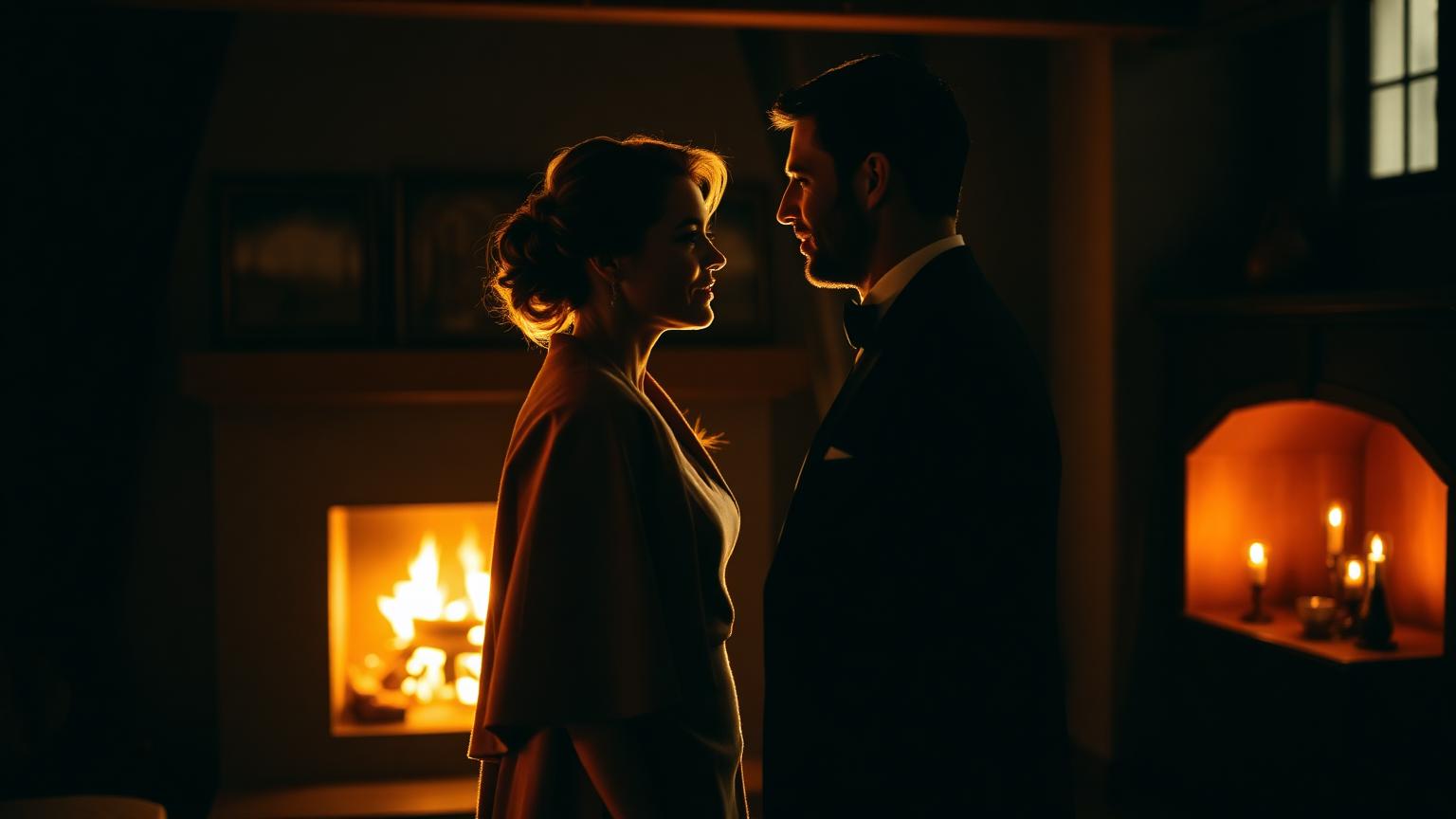
The Kiss
Then his control broke.
She knew he was no longer speaking about the bruise.
The sensible part of her mind reminded her of David, of promises made beneath chandeliers and announced in newspapers. It reminded her of the apartment waiting on Park Avenue, the wedding invitations being prepared and the life she had agreed to live.
But the sensible part of her mind felt very far away.
Cassiel lifted one hand from her waist and touched the bandage near her temple. His fingers traced the edge of it, moved into her hair and came to rest against the back of her neck.
He gave her every opportunity to stop him.
Adrienne rose onto her toes and kissed him.
For one heartbeat, Cassiel did not move.
Then his control broke.
His mouth claimed hers with a hunger that felt less like a beginning than the continuation of something interrupted long ago. His hand tightened at her waist, drawing her against him while the other supported her head with impossible care.
Adrienne gripped his sweater.
The kiss deepened.
The city disappeared. The pain in her head disappeared. There was only the warmth of his body, the faint taste of coffee he had finally made after bringing her to the loft and the startling tenderness beneath his urgency.
Cassiel kissed the corner of her mouth, then the line of her jaw.
His breath touched her throat.
Adrienne closed her eyes.
She had never been kissed as if someone were discovering her.
David’s kisses were polished, familiar and restrained by the certainty that there would always be another. Cassiel kissed her as though this moment had been stolen from time and might be taken back without warning.
His lips returned to hers.
Adrienne felt herself surrendering.
Then the diamond on her hand caught against his sweater.
She froze.
Cassiel felt it immediately.
He lifted his head but did not release her.
“What is it?”
She stared at the ring between them.
“I can’t.”
His breathing was as unsteady as hers. “Can’t or won’t?”
“I promised myself to someone else.”
Pain crossed his face so quickly she might have missed it if she had not been watching.
His hands fell away.
Cassiel stepped back.
The loss of his warmth felt immediate and enormous.
“You’re right,” he said.
Adrienne wrapped her arms around herself. “I’m sorry.”
“Don’t apologize.”
“I kissed you.”
“I was there.”
“This shouldn’t have happened.”
“No.”
The word was controlled, almost cold.
She looked at him. “You agree?”
“I agree that you’re engaged.”
“That isn’t what I asked.”
“It’s the only part that matters.”
Cassiel turned toward the windows.
Adrienne wanted him to look at her. She wanted him to argue, to tell her one promise made for the wrong reasons should not outweigh what had just passed between them.
His restraint hurt more than persuasion would have.
“You must think I’m terrible,” she said.
“No.”
“I’m wearing another man’s ring.”
“I noticed.”
“And I kissed you.”
“I noticed that too.”
“Then what do you think?”
Cassiel faced her.
“I think you nearly died today. I think you’re frightened, injured and trying to understand why you feel safer with a stranger than with the people paid to protect you. I think you should make no decisions tonight.”
“And tomorrow?”
“Tomorrow you go home.”
The words closed like a door.
Adrienne nodded, though the movement hurt her head.
Cassiel returned to the chair and picked up his book.
She lowered herself onto the sofa.
For several minutes neither spoke.
“Cassiel?”
His eyes remained on the page. “Yes?”
“Thank you for stopping.”
He looked at her then.
“I would have stopped the moment you asked.”
“I know.”
That was the problem.
Morning arrived pale and wet.
Cassiel returned Adrienne’s dress cleaned and dry, though the small tear near the shoulder remained. He found shoes for her in a box of clothing kept for disguises and altered appearances. The black flats were slightly too large, but better than walking barefoot.
They ate breakfast at opposite ends of the kitchen counter.
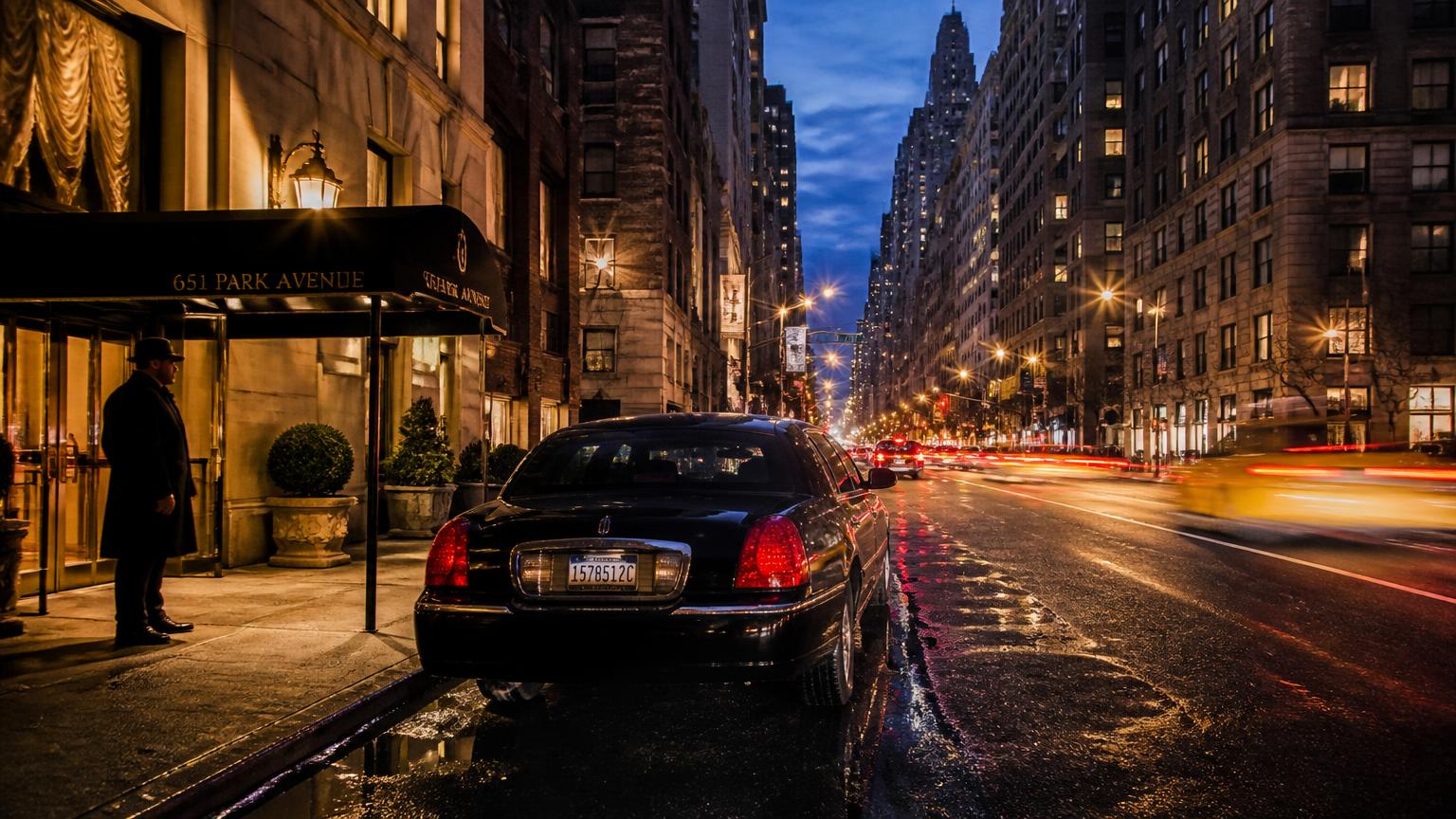
Park Avenue, Raining
Someone had tried to steal Adrienne.
The intimacy of the night had vanished beneath careful politeness.
Cassiel disliked politeness. It concealed more than lies did.
At seven, he checked the street cameras, disabled the remaining tracker in Adrienne’s phone and drove her uptown in a different car.
Neither mentioned the kiss.
Park Avenue gleamed beneath the rain. Uniformed staff waited beneath the awning of Adrienne’s building, along with two police vehicles and a cluster of private security officers.
A tall man in a charcoal overcoat stood at the entrance.
Adrienne straightened when she saw him.
“David,” she said.
Cassiel examined him through the windshield.
David was handsome in the approved manner: clean lines, expensive tailoring, silver beginning at the temples at exactly the age when it suggested distinction instead of decline. He held himself with the confidence of a man accustomed to having rooms arranged before he entered them.
He did not look relieved.
He looked angry.
Cassiel pulled to the curb.
Before he could leave the driver’s seat, Adrienne touched his arm.
“Last night—”
“You don’t owe me an explanation.”
“I don’t want you to think—”
“I think you should go inside.”
Her fingers remained on his sleeve.
Cassiel looked down at them.
Adrienne withdrew her hand.
“Will I see you again?” she asked.
He should have said no.
Instead, he reached into his coat and handed her a card containing only a telephone number.
“If you feel unsafe.”
“Only then?”
“That would be the sensible arrangement.”
A sadness touched her eyes. “I’m beginning to understand how much you dislike sensible arrangements.”
“So am I.”
Adrienne opened the door.
David came down the steps as she stepped onto the pavement.
He did not run to her. He did not pull her into his arms or touch the bandage at her temple. His first glance went to her borrowed shoes. His second went to Cassiel behind the wheel.
Only then did he place both hands on Adrienne’s shoulders.
“Where have you been?”
“I told you. Somewhere safe.”
“You should have come home.”
“I was injured.”
“I had doctors waiting.”
“The men who attacked me knew my schedule.”
David’s jaw tightened. “We will discuss this inside.”
Not Are you all right?
Not I thought I had lost you.
Cassiel got out of the car.
David’s attention shifted immediately.
“You’re the man who took her.”
“The man who prevented someone else from taking her,” Cassiel corrected.
David looked him over with undisguised distaste. “And you are?”
“Cassiel.”
“Cassiel what?”
Adrienne glanced at him, remembering that she had asked the same question.
Cassiel smiled slightly. “Just Cassiel.”
David did not appreciate the answer.
One of the security officers approached, but David lifted a hand to stop him.
“I’d like a word with you,” David said.
Adrienne frowned. “David, he saved my life.”
“So I’ve been told.”
“Then perhaps you could sound grateful.”
David turned to her, and the public mask slipped into place. His expression softened. His voice did not.
“I am grateful. I’m also concerned that a complete stranger removed you from the scene, refused police involvement and concealed your location for more than twelve hours.”
“He didn’t conceal me. I called you.”
“From an untraceable phone.”
“Because someone placed a tracker in my purse.”
For the first time, David’s composure faltered.
It lasted less than a second.
“A tracker?”
Cassiel watched him carefully.
Adrienne nodded. “Cassiel found it.”
David looked at Cassiel again.
The anger in his face sharpened, but beneath it Cassiel detected something else.
Not surprise.
Calculation.
“Go inside, darling,” David said. “Your mother is beside herself.”
Adrienne hesitated.
Cassiel could see that she wanted to object. He could also see the exhaustion in her face and the renewed pain behind her eyes.
“You should rest,” he said.
David’s gaze moved between them.
He noticed too much and understood too little.
Adrienne looked at Cassiel one last time, then allowed a woman in a navy uniform to lead her into the building.
David watched until the doors closed behind her.
Then he turned.
The softness vanished from his face.
“Walk with me.”
Cassiel remained beside the car. “I’m comfortable here.”
“This is a private matter.”
“You’re discussing it on a public sidewalk.”
David glanced at the nearby security officers. “The library, then.”
Cassiel should have left.
Every instinct advised him to return downtown, examine the tracker and discover who had arranged the attack.
But there was something in David’s anger that did not belong.
A grateful fiancé might resent another man’s closeness to the woman he loved. He might question Cassiel’s methods or demand details about the attack.
David looked at him as if Cassiel had interfered with something.
That distinction was worth exploring.
Cassiel followed him inside.
The apartment occupied an entire floor and had been decorated to suggest old money whether or not old money had participated. Marble floors reflected museum-quality lighting. Landscapes hung at measured intervals. Fresh flowers stood on tables no one used.
David led him into a library and closed the door.
Unlike Cassiel’s collection, the books here had been chosen by height and binding. Cassiel doubted many had been opened.
David moved behind a desk.
“I’m told you appeared immediately before the attack.”
“I was buying coffee.”
“And happened to recognize a threat trained professionals missed?”
“They weren’t particularly well trained.”
“They have protected Adrienne for years.”
“Yesterday they failed.”
David’s mouth tightened. “You seem very pleased with yourself.”
“I’m pleased she wasn’t taken.”
“Yes. Naturally.”
The words were correct. The emotion was not.
David opened a drawer and removed a checkbook.
Cassiel nearly laughed.
“What is the appropriate amount?” David asked.
“For what?”
“Your trouble.”
“You think I want money?”
“I think everyone wants something.”
“Then write whatever number allows you to feel generous.”
David studied him. “Ten thousand?”
Cassiel said nothing.
“Twenty?”
“Is that what her life is worth to you?”
Color rose along David’s neck. “Do not be vulgar.”
“You’re putting a price on what happened. I’m asking how you calculated it.”
“I am attempting to compensate you.”
“I don’t want compensation.”
“Then what do you want?”
The question came too quickly.
Cassiel thought of Adrienne in his shirt, firelight warming her face. He thought of the moment her ring had caught against his sweater and the way she had stepped away.
“Nothing you can give me,” he said.
David set down the pen.
“My fiancée spent the night in your apartment.”
“She had a concussion.”
“So you undressed her?”
“Careful.”
The single word altered the room.
David leaned back, but his eyes remained hard. “Did you?”
“She changed her own clothes.”
“What happened between you?”
Cassiel understood then.
David had not asked how many attackers there were. He had not asked whether Cassiel could identify them, whether they had spoken or where the chase ended. He had not asked about the injured guards, the white van or the motorcycle.
He cared about one thing.
What Adrienne might have given another man.
“That’s a question for Adrienne,” Cassiel said.
“She is in no condition to be interrogated.”
“But I am?”
“You brought her back wearing your clothes.”
“She wore my shirt because there was blood on her dress.”
David’s expression shifted again at the word blood, but not with concern. Irritation. As though the injury were another untidy detail requiring management.
“She is to be my wife,” he said.
The phrasing was subtle.
Not I love her.
Not We’re getting married.
She was to be his wife. An acquisition in progress.
Cassiel looked around the immaculate library and suddenly understood where Adrienne would fit. Beside the paintings and unopened books. Beautiful, valuable and carefully displayed.
“Does she know that?” Cassiel asked.
David’s eyes narrowed. “Know what?”
“That you speak about her as if the paperwork hasn’t cleared.”
“You have known Adrienne for one night.”
“And you?”
“Seven years.”
“Then you’ve had seven years to learn she isn’t property.”
David came around the desk. “I don’t know what sort of performance impressed her last night, but do not confuse gratitude with interest.”
Cassiel’s expression remained neutral.
David saw something in it.
His face changed.
“You touched her.”
Cassiel said nothing.
“You son of a—”
David seized the front of his coat.
Cassiel looked down at the hand and remembered the security guard on Madison Avenue.
Everyone made the same mistake.
He could have broken David’s wrist before the man finished drawing breath. Instead, Cassiel removed the hand one finger at a time.
“If Adrienne chooses you,” he said quietly, “I will respect that choice. But do not put your hands on me again.”
David stepped back, flexing his fingers.
“You think this is amusing?”
“No.”
“I could make your life exceedingly difficult.”
“You don’t know anything about my life.”
“I know men like you.”
Cassiel smiled without warmth. “There are no men like me.”
For the first time, David looked uncertain.
Then the practiced superiority returned.
“Despite your behavior, I do owe you thanks,” he said. “I would have been rather put out if something had happened to her.”
Cassiel became very still.
Put out.
As if a shipment had been delayed. As if rain had spoiled a weekend. As if the woman upstairs with blood dried beneath her hair were an inconvenience he had narrowly avoided.
David apparently heard nothing wrong in his own words.
He returned to the desk and closed the checkbook.
“Adrienne’s name carries certain responsibilities,” he continued. “The wedding is approaching, the press watches everything she does, and this incident must be handled discreetly. I expect you to respect that.”
“Her name,” Cassiel said.
“Yes.”
“Her reputation. The wedding. The press.”
David frowned. “What are you getting at?”
“You still haven’t asked whether she was afraid.”
“She is safe now.”
“You haven’t asked what the men did to her.”
“I have security professionals gathering that information.”
“You haven’t asked whether she cried, whether she slept or whether the pain in her head became worse.”
David’s face hardened. “I don’t need to justify my concern to you.”
“No,” Cassiel said. “You would need to feel it first.”
David moved around the desk again, anger overcoming restraint. “Get out.”
Cassiel did not move.
He was thinking about the tracker.
David had known Adrienne’s schedule. He had been offended that her call could not be traced. He was more interested in what happened inside the loft than in the men who had attacked her.
None of that proved involvement.
But Cassiel had built his life on noticing what other people dismissed.
“Who selected her security company?” he asked.
David’s expression closed.
“What?”
“The men protecting Adrienne. Who hired them?”
“Her family.”
“Who recommended them?”
“That is none of your concern.”
“You did.”
David’s silence answered.
Cassiel walked toward the door.
“Stay away from her,” David said behind him.
Cassiel stopped with his hand on the brass knob.
“That decision belongs to Adrienne.”
“She has made her decision. She is marrying me.”
“Then you should be happy.”
David did not reply.
Cassiel looked back.
The anger on the man’s face was too intense for jealousy and too controlled for fear. It was the fury of someone whose design had been disrupted, though Cassiel could not yet see the complete shape of it.
Adrienne had survived.
David should have been grateful.
Instead, he seemed offended.
Cassiel opened the door.
In the corridor outside, a uniformed attendant waited to escort him to the elevator. Cassiel followed, passing beneath a gilt-framed mirror.
A movement appeared in its reflection.
Adrienne stood at the far end of the hallway.
Someone had removed the bandage and covered the cut with a smaller strip. She wore a pale robe, one hand resting against the wall for support.
Their eyes met in the mirror.
Neither spoke.
David stepped into the corridor behind Cassiel.
“Adrienne,” he said sharply. “You should be in bed.”
Her gaze moved from Cassiel to her fiancé.
“I heard voices.”
“Nothing you need to concern yourself with.”
Cassiel watched the words reach her.
Something shuttered behind her eyes.
For a moment, she looked exactly as she had described herself beneath her parents’ dining table: present, listening and treated as though she were powerless.
Cassiel turned fully toward her.
“If you need me,” he said, “use the number I gave you.”
David’s jaw tightened.
Adrienne closed her hand around the card hidden in the pocket of her robe.
“I will.”
Cassiel entered the elevator.
The doors began to close.
David crossed the hall and placed a possessive hand at the back of Adrienne’s neck. To anyone else, it might have looked affectionate.
Cassiel saw her shoulders stiffen.
Then the doors met, cutting off the view.
As the elevator descended, he reconstructed the attack.
The purse beside the Mercedes.
The motorcycle waiting before Adrienne left the boutique.
The white van arriving at the exact moment the gray sedan moved.
The tracker.
The weak security formation.
And David, who had recommended the company responsible for protecting her.
Cassiel reached into his coat and removed the tiny tracker he had taken from the glass before leaving the loft. Water had damaged its transmitter, but perhaps not its memory.
On the back was a manufacturer’s mark and a partial serial number.
It would be enough.
His phone vibrated.
A message appeared from an unknown number.
Forget what happened yesterday. Stay away from the woman.
Cassiel read it twice.
Then he looked up at the brass numbers descending above the elevator doors.
Love at first sight was a weakness.
Perhaps.
But every thief knew that the value of a thing was determined by what someone was willing to risk to possess it.
The men on Madison Avenue had risked guns, witnesses and daylight to take Adrienne.
David spoke of her as status, responsibility and possession.
Someone had gone to considerable expense to make her disappear.
Cassiel slipped the tracker back into his pocket.
He had entered the coffee shop wanting nothing more than caffeine. He had left it with an armed pursuit, a bruised rib and the taste of another man’s fiancée still lingering on his mouth.
He should have walked away.
He should have forgotten her.
Instead, when the elevator doors opened, Cassiel was smiling.
Someone had tried to steal Adrienne.